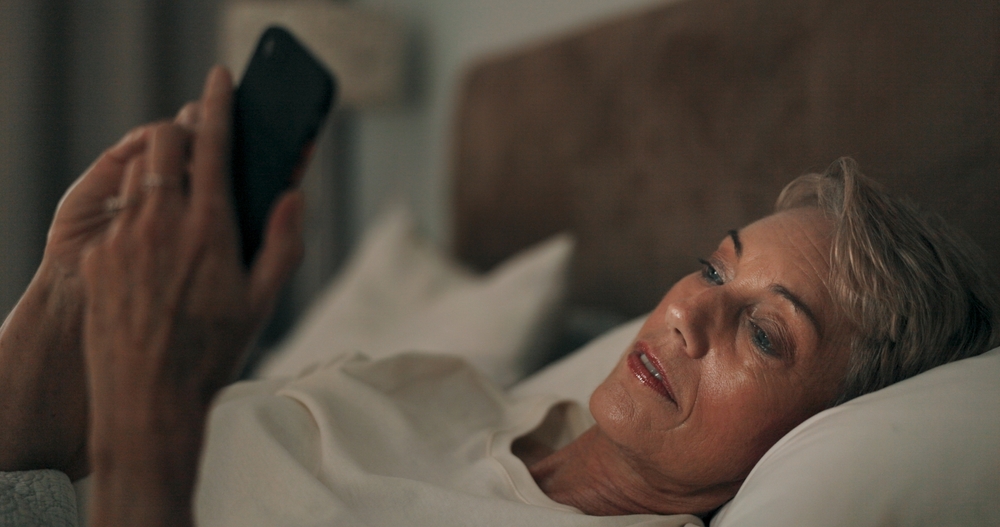
Yes, tracking your symptoms can reduce them. In a 2023 randomized controlled trial of 100 perimenopausal and postmenopausal women, two weeks of daily symptom tracking cut physical symptoms by 42%, compared with 12% in the control group, and significantly reduced negative emotions. No hormone, no prescription, no app: the women used a simple paper record form. Here is what the research shows, why it works, and how to make the habit effortless.
Sources: Andrews et al., Menopause, 2023; Andrews et al., Frontiers in Global Women’s Health, 2021; Andrews et al., BMJ Open, 2023. The randomized trial was independent of Harmoni® and did not use our app. Updated October 17, 2026.
Does tracking perimenopause symptoms actually reduce them?
The best evidence says yes, and the effect is larger than most women expect. In the first randomized controlled trial to test symptom monitoring as a stand-alone intervention during the menopause transition, published in Menopause, the journal of The Menopause Society, women who recorded their symptoms every day for two weeks reported 42% fewer physical symptoms at follow-up. Women in the control group, who did not track, reported a 12% reduction over the same period, the kind of drift you expect from simply being in a study.
The difference held after the researchers controlled for personality traits such as neuroticism, coping style, and medical and demographic differences between the women. Negative emotions also fell significantly in the tracking group and did not change in the control group.
That is one trial, and the authors are careful to say so. But it sits on top of a systematic review and meta-analysis of 18 studies that points the same way, and a two-month study of 1,900 app users in which the women who logged most often improved most. The direction of the evidence is consistent: paying daily attention to your symptoms changes them.
What exactly did the randomized trial find?
The study, by Robin Andrews, Bev John, and Deborah Lancastle, enrolled 100 perimenopausal and postmenopausal women with a mean age of 46. Half were randomized to monitor their symptoms daily using the Daily Record Keeping form, a paper diary; half were a control group. Everyone was assessed at baseline and again two weeks later.
- Physical symptoms: down 42% in the tracking group versus 12% in the control group (p = 0.009).
- Negative emotions: significantly reduced in the tracking group (p < 0.001); unchanged in the control group.
- What did not change: help-seeking, communication with clinicians, medical decision-making, health awareness, self-efficacy, and health anxiety all moved in the expected direction but did not reach statistical significance in two weeks.
Three things are worth knowing before you repeat the number. First, the women used paper, not an app, which is good news: the benefit comes from the act of tracking, not from any particular product, including ours. Second, two weeks is short. The trial shows that tracking works quickly; it does not tell us how long the benefit lasts or how much more you gain by continuing, which is where the longer app studies below come in. Third, the lead author now works for Health & Her, a UK menopause app company, which is disclosed in the paper. We flag it because you should know who funds and conducts the research you read, and because it does not change the design of a randomized trial.
Why would writing down a symptom make it better?
It sounds too simple to be true, so it helps to understand the mechanism. Symptom monitoring has been used in medicine for decades, in migraine, diabetes, asthma, and chronic pain, because of what it does to attention and behavior.
It turns a fog into a pattern. A hot flash at 3 PM is an event. Five hot flashes this week, four of them after coffee or wine, is information. Once a trigger is visible, most women change the behavior without being told to.
It lowers the alarm. Much of the distress of perimenopause is uncertainty: is this normal, is it getting worse, is something wrong with me? A record answers those questions with data instead of dread. The trial’s drop in negative emotions is consistent with this; the authors frame monitoring as giving women “a simple and accessible means of symptom alleviation while they await treatment or medical consultation.”
It restores a sense of control. Psychologists call it self-efficacy. When you can see that your sleep improved on the nights you walked after dinner, you have a lever to pull. Perimenopause stops being something that happens to you and becomes something you are managing.
It makes the next conversation better. Perimenopause is diagnosed from symptoms and history, not a blood test. A clinician looking at eight weeks of dated entries can see what a from-memory summary cannot.
What does the wider research say about tracking apps?
The paper trial establishes that tracking itself helps. Three further studies look at what happens when the tracking happens in an app, over longer periods.
The 2021 systematic review and meta-analysis in Frontiers in Global Women’s Health pooled 18 studies with 1,718 participants and found symptom monitoring was associated with fewer menopausal symptoms, better patient-doctor communication, and more involvement in treatment decisions. For prolonged diary use, the effect on hot flash frequency was large (standardized mean difference 0.73). The authors call the evidence preliminary because many of the underlying studies were small or at risk of bias.
A 2023 cohort study in BMJ Open followed 1,900 users of the Health & Her app for two months. Greater engagement predicted greater symptom reduction; daily symptom logging and daily period logging were each independently associated with improvement, and nine weeks of engagement was associated with a meaningfully larger reduction than two. It was funded by the app’s maker and had no control group, so it shows a dose-response pattern rather than proving cause.
A 2025 randomized trial in JMIR mHealth and uHealth tested a six-week app-based program of CBT, mindfulness, and movement in 149 women with hot flashes. Hot flash severity fell more in the app group than in a group given educational links (p = 0.007), and depression and sleep scores improved in the app group only. It too was company-funded, and participants were not blinded.
Read together: the independent paper trial shows tracking works; the app studies show the benefit grows with consistency and can be extended with guided support. None of them tested Harmoni, and we would rather tell you that plainly than let you assume otherwise.
Which symptoms should you track?
Track what is actually bothering you, plus the handful of signals that explain it. In practice that means your top three symptoms (for most women in perimenopause: broken sleep, mood swings or anxiety, and hot flashes or brain fog), your cycle if you still have one, and the behaviors that move them: sleep hours, alcohol, caffeine, movement, and stress.
Harmoni® tracks 27 perimenopause and menopause symptoms, including the ones most apps leave out: lowered drive, brain fog, fatigue, mood changes, and the 3 AM wake-up. It also pulls sleep, steps, and activity from Apple Health and Fitbit automatically, so the explanatory data arrives without effort.
How often, and for how long?
Daily, for at least two weeks, and ideally through to your next appointment. The trial saw its effect at 14 days; the BMJ Open cohort saw bigger reductions at nine weeks than at two. If you are preparing to see a clinician, two to three months of daily entries gives them enough to see a pattern across more than one cycle.
Consistency matters more than detail. One honest minute a day beats a thorough entry once a week.
How do you track without it becoming another chore?
This is where most tracking fails, and it is the problem we built Harmoni to solve. Tapping through menus every evening is a chore, and chores get dropped by week three.
So Harmoni listens instead. Tell her how you feel in your own words, by voice with Siri or in a quick conversation, and she does the logging. “Slept badly, hot flash before lunch, low mood this afternoon” is a complete entry. No buttons to press, no forms to fill. Daily check-ins, cross-tracker insights, and a trend report are built on top of that one habit.
How do you bring your tracking to your doctor?
Export a trend report that shows your symptoms over time alongside your sleep and activity, and bring it to the appointment. Then ask three questions: Which of these patterns concerns you? What would you want to rule out? What are my options, including hormone therapy and non-hormonal treatments, and what would you track to know if they are working?
A dated record changes the conversation from “I think I have been feeling off” to “here are eight weeks of data,” and the systematic review found that is exactly where monitoring helps most: communication and shared decisions.
How Harmoni, the perimenopause tracking app, helps
Harmoni® by thePause® is the perimenopause tracking app built around the finding in this article: that the daily act of paying attention reduces symptoms. It tracks 27 symptoms and nine daily trackers, syncs with Apple Health and Fitbit, lets you log by voice with Siri or in conversation, surfaces the patterns across your week, and produces a trend report you can bring to your clinician. It was built with women’s health clinicians, and it is private by design.
Start tracking today. Two weeks is all the trial needed. Harmoni® is free for 7 days on iOS and Android.
Ready to take your tracking to a clinician? Our co-founder and Chief Medical Officer, Dr. Mia Chorney, DNP, FNP-BC, MSCP, is a Menopause Society Certified Practitioner. At Amsara Health, your visit starts with your Harmoni trend report, your labs, and your history, so the conversation begins with evidence about you.
Frequently asked questions
Does tracking menopause symptoms really reduce them?
Yes, according to a 2023 randomized controlled trial of 100 perimenopausal and postmenopausal women published in Menopause. Two weeks of daily symptom tracking reduced physical symptoms by 42%, compared with 12% in the control group, and significantly reduced negative emotions. A 2021 systematic review of 18 studies found the same direction of effect.
How long do you need to track before it helps?
The randomized trial measured the benefit at two weeks. A two-month study of 1,900 app users found larger reductions with nine weeks of engagement than with two. Daily tracking for two to three months before a clinical appointment is a reasonable goal.
Was the study done with the Harmoni app?
No. The randomized trial was independent of Harmoni and used a paper daily record form. That matters because it shows the benefit comes from the habit of tracking itself. Harmoni is designed to make that habit effortless, by voice with Siri or in conversation.
Which perimenopause symptoms should I track?
Your three most troublesome symptoms, your cycle if you have one, and the behaviors that influence them: sleep, alcohol, caffeine, movement, and stress. Harmoni tracks 27 symptoms, including lowered drive, brain fog, fatigue, and mood changes, and syncs sleep and activity from Apple Health and Fitbit.
Can I track perimenopause symptoms by voice?
Yes. Harmoni works with Siri and has a conversational voice, so you can say how you feel or tell Harmoni what is going on in your own words and it logs the symptom for you. There are no buttons to press.
Is symptom tracking a replacement for treatment?
No. Tracking reduces symptoms and improves conversations with your clinician, but it is not a substitute for medical care. Hormone therapy and non-hormonal treatments are effective for many women. Tracking helps you and your clinician decide what to try and tells you whether it is working.
Related reading on thePause
- How to track perimenopause and menopause symptoms: the definitive guide
- Symptoms of perimenopause: why they happen and why they are often missed
- Best perimenopause and menopause apps in 2026
- Testosterone for perimenopause and menopause: what the evidence says
Sources
- Andrews RAF, John B, Lancastle D. Symptom monitoring improves physical and emotional outcomes during menopause: a randomized controlled trial. Menopause. 2023;30(3):267-274.
- Andrews R, Hale G, John B, Lancastle D. Evaluating the effects of symptom monitoring on menopausal health outcomes: a systematic review and meta-analysis. Frontiers in Global Women’s Health. 2021;2:757706.
- Andrews R, Lancastle D, Bache K, Lacey AS. Does Health & Her app use improve menopausal symptoms? A longitudinal cohort study. BMJ Open. 2023;13(12):e077185.
- Duffecy J, et al. Evaluating a mobile digital therapeutic for vasomotor and behavioral health symptoms among women in midlife: randomized controlled trial. JMIR mHealth and uHealth. 2025;13:e58204.
- The Menopause Society. The 2023 Nonhormone Therapy Position Statement. 2023.
This article is for educational purposes and is not medical advice. Talk with a qualified healthcare provider about your individual situation. The randomized trial described here was independent of The Pause Technologies and did not use Harmoni®.