
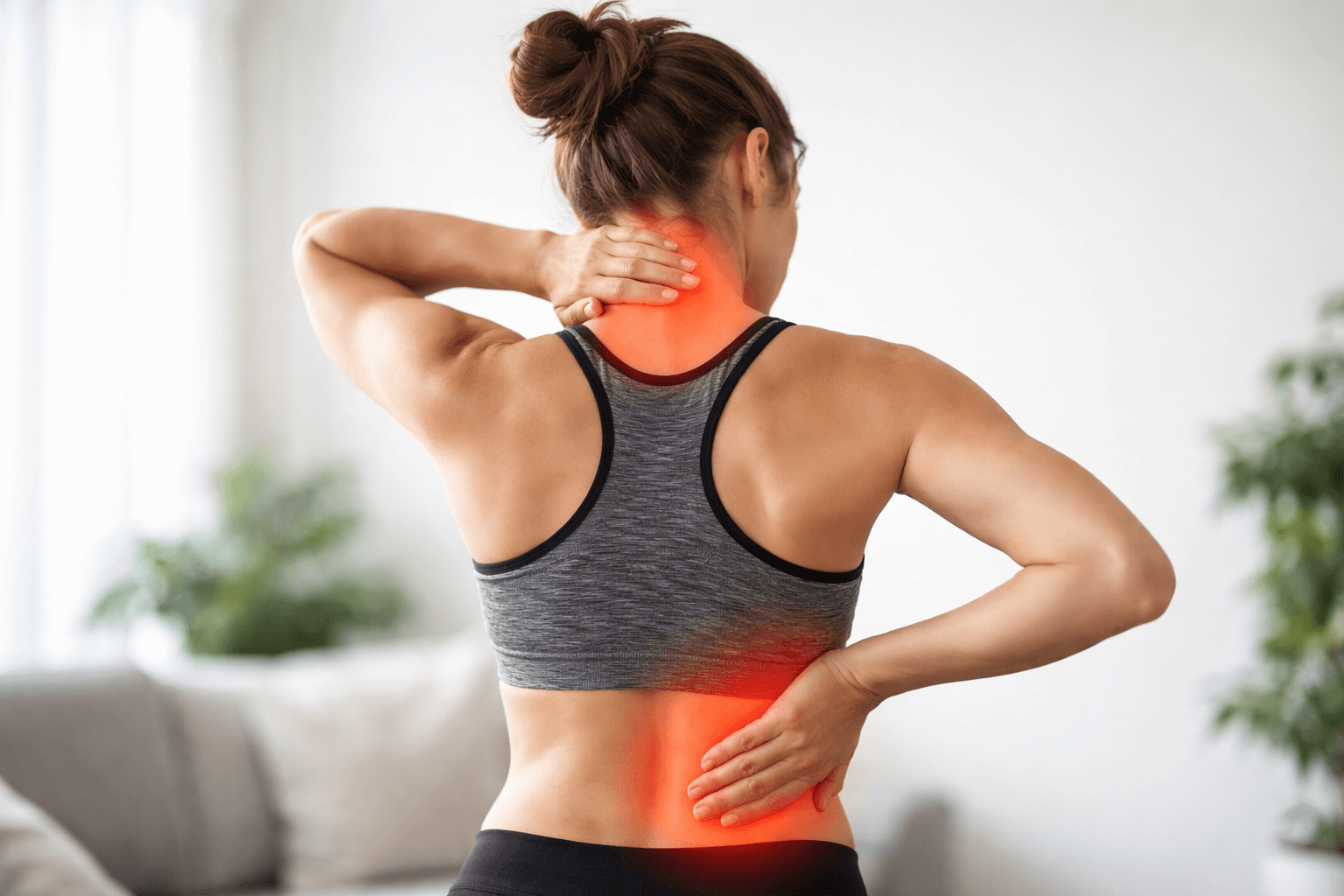
For decades, women have described a very real shift in their bodies during perimenopause and menopause. More stiffness. More aches. More joint and muscle pain that seems to appear without injury or explanation.
Too often, these symptoms were dismissed as nonspecific, vague, or simply part of getting older.
A newly published 2026 systematic review and meta analysis brings much needed clarity (Kruse et al. 2026).
This review analyzed data from more than 93,000 women across 22 countries, making it one of the most comprehensive evaluations to date of musculoskeletal symptoms across the menopause transition.
The findings are striking.
- 40 percent of premenopausal women report muscle or joint pain.
- 57 percent of perimenopausal
- 59 percent of postmenopausal
This represents a 35 to 40 percent increased risk of musculoskeletal pain after the menopause transition.
This is not random.
Despite the prevalence, the review highlights a persistent problem in medicine. Pain during midlife is often poorly characterized. Specific musculoskeletal conditions are rarely named.
Hormonal contribution is still under evaluated or ignored entirely.
Yet we know estrogen receptors are present throughout the musculoskeletal system—in muscle fibers, in tendons and ligaments, and in fascia, cartilage, and bone.
Estrogen plays a central role in collagen production, tissue elasticity, inflammation regulation, neuromuscular signaling, and recovery after mechanical stress. When estrogen fluctuates and declines, these systems change.
That can present as
- Exercise intolerance
- Slower recovery
- Tendon irritation
- Diffuse muscle aching
- A sense that your body no longer responds the way it used to
Calling this just aging is inaccurate. Calling it vague is dismissive. This is our biology.
This review reinforces what women have been saying for years and what many of us see daily in clinical practice. Midlife musculoskeletal pain deserves proper recognition, precise language, and evidence based care that includes hormonal physiology as part of the conversation.
If your body feels different in this season, if movement feels harder, if you were told nothing is wrong when everything feels off, you are not imagining it, and you are not alone.
We are entering a long overdue shift in how we understand women’s musculoskeletal health across the lifespan.
My best,
Dr. Mia Chorney